

기존 제품에서 지속 가능성을 찾아 보십시오. 웨비너 하이라이트입니다.
VanEck의 정부 기관들이 전 세계적으로 탄소 감축 정책을 발표함에 따라, 재생 에너지와 청정 기술에 대한 투자가들은 장기 투자자들에게 광범위한 기회를 창출하고 있습니다.
최근 웹 세미나에서 전 세계 자원 및 환경 친화적 연구팀의 고위 투자 전문가들이 단기 개발자를 탐색하는 핵심 헴에 대한 견해를 공유하고 향후 지속 가능한 목표에 대한 시사점을 공유했습니다. 맥주 언더웨어와 전통적인 상품과 지속 가능한 트렌드 간의 역동성을 추구하는 호스를 위해, 다음은 웨비너에서 얻을 수 있는 세 가지 핵심 요점입니다.
기회는 여러분이 생각하는 것보다 더 큽니다. 그의 권력과 수송 유전자가 헤드라인을 장식하는 동안, 지속 가능한 트렌드의 전체적인 영향은 산업 전반에 걸쳐 있으며 많은 투자자들에게 과소평가되고 있는 광범위한 기회를 창출할 것입니다.오래된 것은 새롭습니다. 방사성 에너지 공급자들이 지속 가능한 추세와 최근의 지정학적 사건들을 따라잡기 위해 경쟁함에 따라, 앞으로 청정 기술은 천연가스나 재생 가능한 디젤과 같은 분야의 기회들을 창출하고 있습니다.음식의 미래입니다. 현재의 환경과 계속 증가하는 인구에 대응하여, 우리는 특히 농업 공간이 더 깨끗하고, 더 건강하며, 더 환경적으로 지속 가능한 식품에 대한 증가하는 수요에 대응할 필요가 있을 것으로 기대합니다.다음은 헴과 렌드샤에 대한 개요를 포함한 이 대화에서 하이라이트를 제공하는 내용이며, 향후 수십 년 동안 우리가 할 수 있을 것으로 믿는 장기적인 지속 가능한 이니셔티브입니다. 웨비나 재생의 전체 내용은 여기에서 확인할 수 있습니다: Finding Susanability in the Traditional Commodies.
수십 년에 걸친 과도기적 전환이 초기 단계에 접어들고 있습니다. 전 세계의 정부 관리들이 장기적인 탄소 감축 정책을 추진함에 따라 청정 기술에 대한 누적된 투자가 급증할 것으로 예상됩니다. 예를 들어, 글로벌 공급망 전체에 걸쳐 건물과 공장을 현대화하고 디지털화하는 것뿐만 아니라 기존 인프라의 대대적인 개편이 포함됩니다.
우리는 그의 수 십 년간의 변천이 많은 투자자들에 의해 과소평가되는 광범위한 기회를 만들 것이라고 믿습니다(06:04). 예를 들어, 그는 환경 친화적인 목적에 초점을 맞추어서 주로 전력과 운송에 집중하는데, 이는 범위가 너무 좁을 가능성이 높습니다. 농업, 임업 및 기타 토지 사용은 전기 및 열 생산(08:50)과 거의 같은 양의 전지구적 배출에 기여합니다.
지속가능성: 부문별 광범위한 산업 배출을 해결합니다.
@img src=”hps://www.vaneck.com/conenasse s/1094b88727934fd6fd8d37c06f782/esf-dechn_char_01_2022.05_2008_opion-2_v2.svg” 폭 h=”626″ 높이 =”352″>
출처: 브루킹스 식스입니다. 2020년 12월 기준입니다.
보수적 예측조차도 재생 에너지와 청정 기술에 대한 Robus 수요를 나타냅니다.
국제 에너지 기구(IEA)의 SAED Policies 시나리오(STEPS)는 많은 정부 관리들이 현재 달성한 기후 목표(09:50)를 완전히 충족시키지 못할 것으로 가정하여 향후 지속 가능한 투자 성장에 대한 보다 보수적인 벤치마크를 제공합니다. 그럼에도 불구하고, 그의 더 보수적인 생각조차도 재생 가능 에너지와 관련 청정 기술의 급격한 증가에 대한 저력을 강조하며, 이는 다양한 산업에 걸쳐 상당한 기회를 창출할 것입니다.
베리어와 전기자동차는 성장잠재력의 주요 원천입니다./h2 우리는 그가 전기자동차(EV)를 이전하는 것이 현재 사용 가능한 채권 트렌드 중 가장 강력한 기회 중 하나라고 믿습니다.
3 재생 에너지, 전기 자동차 및 전기화에 대한 총 주소 지정 가능 시장
출처: 베른세인, 반에크입니다. 2021년 1월 기준입니다. 회사 약어(해당하는 경우): LG에너지솔루션(LGES), BYD(BYD), 삼성SDI(SDI), 현대암페렉스테크놀로지(CATL), SK이노베이션(SKI), 테슬라(TSLA) 등이 있습니다. 여기에 언급된 어떤 유가증권도 구매하거나 판매할 수 있는 권고는 없습니다.
위의 그림에서 알 수 있듯이, 배터리 및 전기 자동차의 건전 주소 지정 가능 시장은 거대합니다(10:45). 위의 검은색 정사각형은 현재 구축된 EV 베리어 ha의 용량을 나타냅니다. 향후 EV에 대한 예상 수요를 충족시키기 위해 그의 용량은 2020년 수준(전년 대비 15% 성장)에서 2050년까지 70배 증가할 것으로 예상됩니다.
재생 에너지에 대한 수요 증가는 광물 분야의 새로운 기회로 이어집니다.
시프트 포워드 신재생 에너지는 새로운 상품에 대한 치솟는 수요를 창출하고 있습니다. 구리, 코발트, 리튬, 니켈과 같은 광물은 청정 기술의 필수적인 구성요소입니다. 또한 EV와 같은 청정 기술은 기존 에너지원에 비해 훨씬 더 많은 미네랄을 필요로 합니다(13:58)
향후 몇 년 동안 수요가 증가하거나 증가할 것으로 예상됨에 따라 청정 기술에 사용되는 광물은 장기 투자자들에게 매력적인 투자 기회를 제공합니다. 그러나 선택성과 유연성은 그의 공간에 투자하는 데 필수적인 요소입니다. 청정 에너지 기술을 위한 주요 입력 광물은 이미 급격한 가격 상승을 보이고 있지만, 모든 청정 기술이 동일한 광물에 의존하는 것은 아닙니다. 예를 들어, 구리는 EV 생산에 필수적인 역할을 하며, 지열 공간에서는 사용되지 않습니다. 저는 상품시장과 지속 가능한 트렌드에 대한 포괄적인 견해를 가지고 있습니다.
청정 에너지 광물의 다음 큰 주제: 재활용
리튬과 코발과 같은 식사에 덜 확립된 재활용 관행 또한 청정 기술 광물 공급의 미래에 더 중요한 역할을 할 것으로 예상됩니다(17:43). 그러나, 2040년의 예측을 고려하더라도, HEA에 따르면, 이러한 재활용 가격은 EV 및 배터리 저장용 광물 공급의 전체 10% 미만으로 유지될 것으로 예상됩니다. 청정 기술에 사용되는 대부분의 식사는 방사성 물질로부터 채굴되어야 하며, 이는 공급망이 더 지속 가능하고 안전해져야 한다는 것을 의미합니다. 예를 들어, 책임 있는 광물 소싱을 강조하면서, 광물 추출 및 가공의 지리적 집중(15:42)에 대한 세계적인 우려가 커지고 있습니다. 시간이 지남에 따라, 우리는 정부 관리들이 육지 공급의 개발을 장려할 것으로 기대합니다.
천연가스를 위조하지 마세요.재생 가능 에너지와 청정 기술은 수십 년 동안 사용될 장기 트렌드입니다. 즉, 여기도 최근의 지정학적 혼란(23:30)에 의해 증폭되고 있는 전통적인 에너지원의 기회들이 있습니다.
유럽은 러시아에서 공급되는 석유와 가스의 주요 소비국 중 하나입니다. 유럽 공동체는 이미 에너지원을 다양화하는 파호(paho)를 진행 중이었고, 플랑헤이는 우크라이나에서 충돌한 이후 가속화되고 있습니다. 유럽의 계획에는 세 가지 주요 요소가 있습니다.
이온 다양화: 2022년 10월 1일까지 가스 저장 수준을 90%로 보장하고, 새로운 액화 천연 가스(LNG)와 파이프라인을 추가하고, 2030년까지 550억 입방미터(bcm)의 재생 가스 생산량을 확장합니다(바이오메탄과 수소 포함).전기 이온 레이지: 풍력 및 태양 에너지 배치를 20% 증가시키고 에너지 소비 및 헤드 펌프 사용에 있어 행동 변화를 장려합니다.연료 전환 옵션: 연간 220bcm의 석탄 연소식 발전용 가스 수요 시간당 120시간 추가. 2022년에 정비 중인 원자로를 반납하고 주요 원자로의 정지를 일시적으로 지연시킵니다.이러한 상품 시장의 공급과 수요의 변화는 새로운 승자들이 등장할 수 있는 길을 열어줄 것입니다. 예를 들어, 효율적인 생산 시설을 갖춘 유럽 기반의 가스 공급업체는 유럽에 더 많은 가스를 공급할 수 있는 좋은 위치에 있습니다. 또한, 유럽이 전기화 열풍에 대한 공급을 목표로 하고 있기 때문에 기업들은 해상 풍력 에너지 및 기타 혜택에 대해서도 혁신을 이루고 있습니다.
2 신재생 디젤도 단기적으로 혜택을 받을 수 있습니다
2018년부터 2025년까지 재생 디젤 시장 공급은 연간 약 500만~2500만 달러(27:46)에서 증가할 것으로 예상됩니다.1 향후 5년 동안 유럽은 재생 디젤 수입국 중 한 곳으로부터 예상된 시장 점유율인 반면, 미국은 전 세계적으로 점유율이 없을 것으로 예상됩니다. 수요와 공급이 늘어납니다.
이러한 시장 배경은 풍부한 투자 기회와 단합된 기회를 만들어 내고 있습니다. 예를 들어, 네이스는 재생 가능한 도로 운송, 재생 가능한 항공, 재생 가능한 플라스틱 및 생화학 등 세 가지 제품군에 걸친 유일한 재생 가능한 디젤 정제기 기술입니다. 이 모든 것들은 재활용 가능한 원자재로 만들어졌습니다. 저는 세계에서 재생 가능한 디젤과 제 연료의 큰 생산자이기도 합니다.
토알 에너지, 에니, 쉐브론과 같은 통합 석유 회사들 또한 그들의 거대한 재생 가능 어젠다에서 중요한 요소로서 기존 재래식 정유소의 전환에 초점을 맞추고 있습니다. 재생 가능한 디젤의 기회에 대한 자세한 내용은 “재생 가능한 디젤로 지속 가능한 미래 연료 공급”을 참조하십시오.
수소의 수입 역할은 국가들이 제로(0)의 목표를 달성하고 화석 연료에 대한 의존도를 줄이는 데 중요한 기여를 할 것입니다(32:50). 현재 수소 공급의 대부분은 “회색” 공급원(즉, 탄소 저장 장치가 없는 메탄 개혁)에서 나오지만, 이미지에서는 2030년까지 생산량의 최소 30%가 청정 공급원(즉, 재생 에너지에 의해 구동되는 전기 분해를 통해)으로 전환될 수 있음을 보여줍니다.2
음식의 미래: 농업은 또한 지속 가능한 변화의 직전에 있습니다. 전 세계 인구 증가, 방사성 식품 공급원의 온실 가스 배출, 그리고 소비자의 선호도 변화는 농업에서 지속 가능한 변화를 이끌고 있습니다.
세계 인구는 현재 78억 명에서 2050년까지 약 100억 명까지 25% 증가할 것으로 예상됩니다. 동시에, 역사상 어느 때보다도 더 많은 사람들이 중산층 중 한 명이 될 것으로 예상되는데, 렌다는 자원 집약적이고 더 높은 온실 가스 배출로 이어지는 동물성 식품의 소비를 증가시킬 것입니다. 저는 2015년에 비해 그의 더 크고 부유한 인구를 먹여 살리기 위해 70%나 더 많은 식량을 생산할 수 있을 것입니다.
앞으로, 우리는 더 깨끗하고, 더 건강하고, 더 환경적으로 지속 가능한 식품에 대한 증가하는 수요가 대체 단백질과 유제품과 같은 도심 지역에서 성장할 수 있는 기회를 만들 것으로 기대합니다(34:40
VanEck의 지속 가능한 솔루션 수익과 포부를 일치시킵니다
이 지속 가능한 헴에 의해 창출되는 광범위한 기회를 활용하기 위해 VanEck는 보헤시브 및 수동적 접근 방식을 포함하여 평형 및 고정 소득에 걸쳐 광범위한 비례를 제공합니다.
UNSDGs 환경 지속가능성 기금
(ENVAX) 친환경 식품 ETF
(GMET) GreenBond ETF
(GRNB) 아침은 ESG Moa ETF
(MOTE) HIP 지속가능성 식품
더 많은 천연 자원 및 지속 가능한 투자 정보를 얻으려면 당사의 서브스크립션 센터에서 등록하십시오.
원래 2022년 5월 20일에 VanEck에 의해 출판되었습니다. 더 많은 뉴스, 정보 및 비겁한 정보를 보려면 Basic Bea Channel을 방문하십시오. 공개합니다.
1 출처: Barclays, VanEck, BNEF입니다. 2022년 3월 기준입니다.
2 출처: 수소 위원회입니다. 2022년 3월 기준입니다.
이는 본 문서에 언급된 증권/금융 증권을 구입하거나 판매하기 위한 제안이나 제안이 아닙니다. 제시된 정보에는 개인화된 투자자, 재무, 법률 또는 도끼 조언의 제공은 포함되지 않습니다. 본 문서에 포함된 세린 에멘은 예측, 예측 및 기타 미래 지향적인 에멘을 고려할 수 있습니다. 이러한 에멘은 커뮤니케이션의 시작일 현재 유효하며, 무주택 변경 대상입니다. 제3자가 제공한 정보는 신뢰할 수 있는 것으로 간주되며 정확성 또는 완전성에 대해 독립적으로 검증되지 않았으며 보장될 수 없습니다. VanEck은 3번째 페이다의 정확성을 보장하지 않습니다. 여기에 있는 정보는 저자의 의견을 나타내지만, 반드시 VanEck의 호스는 아닙니다.
본 문서에 제공된 이 자료 및 자료 정보는 해당 자료를 배포하거나 기금 내재의 구매 또는 판매가 적용되는 모든 사법권의 시민 또는 거주자(또는 소재지 또는 설립자)에게 배포하도록 지시되거나 의도된 것이 아닙니다. 해당 관할 구역의 모든 지역 또는 면허 요건입니다. 그의 자료를 검토하고자 하는 사람은 펀드 투자 자격에 영향을 미칠 수 있는 법적 또는 규제적 제한을 스스로 알고 준수해야 합니다. 의심이 들 경우 전문적인 조언을 구해야 합니다.
그의 유품에서 어떤 투영, 시장 모습, 이미지들은 모두 앞을 내다보는 시멘트로, 반에크의 의견일 뿐이라는 특정한 추정에 근거하고 있습니다. 모든 투영, 외관 또는 가정은 발생할 실제 발생을 나타내는 것으로 간주되어서는 안 됩니다. 또한, Porolio 조성 방법론, Porolio 조성 방법론, 투자 프로세스 또는 한계 또는 평가 회사 및 상표의 평가 방법에 관한 모든 정보는 VanEcka에 의해 단독 재량으로 언제든지 수정 또는 변경될 수 있는 지침으로 의도됩니다.
반에크 환경 지속가능성 기금의 지속가능성 위반은 기금이 다른 유가증권에 대한 투자나 전반적인 헤커먼트를 저평가하는 결과를 초래할 수 있으며, 기금이 특정 남성들의 성과를 저하시킬 수 없는 불리한 결과를 초래할 수 있습니다. 이 펀드는 또한 Hadvisor에 의해 확인된 회사가 지속가능성 문제를 다룰 때 예상대로 작동하지 않을 경우 위험을 감수해야 합니다. 그의 정의 및/또는 지속가능성 기준의 사용에 관한 규제 변경 또는 부조화는 지속가능성 기준에 따라 펀드가 투자할 수 있는 능력에 중대한 악영향을 미칠 수 있습니다.
기업들은 긍정적인 환경 정책을 홍보하고 있으며, 기업들이 그러한 목표를 추구하지 않는 만큼 좋은 성과를 거두지 못할 수도 있습니다. 환경적으로 유익한 비즈니스 라인에 참여하는 발행인은 식별이 어려울 수 있으며, 이에 대한 투자는 유동적일 수 있습니다. 환경에 초점을 맞춘 투자는 본질적으로 질적이고 주관적인 것이며, 여기에는 H 고문에 의해 활용되거나 H 고문에 의해 실행된 어떠한 판단도 특정 투자자의 의견을 반영할 것이라는 보장이 없습니다.
HIP Sustainable Muni ETF가 지속 가능한 개발을 촉진하는 발행인의 지방채 증권에 투자하는 것은 HE Fund가 이용할 수 있는 투자자의 종류와 수를 제한하거나 Fundo가 증권 투자에서 전체적으로 시장 실적을 저하시킬 수 있습니다. 그 결과, 펀드는 지속 가능한 투자 등급이 없거나 지속 가능한 투자 등급이 HIP 등급을 채택하지 않은 펀드를 저평가할 수 있습니다. 또한, HIP 등급에 따라 지속 가능한 개발자를 홍보하는 발행인의 신원 확인을 위해 HDA 제공자에 의존합니다. 그러나 HDA 제공자의 방법론이 HIP의 투자 범주 또는 바람직한 발행인을 정확하게 확인할 수 있다는 보장은 없습니다. 게다가, 유엔 지속가능개발목표(“SDGs”) 9, 11 및 12는 향후 수정되거나 폐기될 수 있으며, 여기서 HIP Rayings를 계속 사용하거나 적절한 자급제 시스템을 찾을 수 없다는 보장이 있을 수 없습니다.
VanEck HIP Susinable Muni ETF의 Anives men은 다른 것들 중에서 지속 가능한 영향과 관련된 위험들을 포함하는 대상 위험들일 수 있습니다 , 지방 증권들 , 신용들 , inerrearea , 콜 , da , 캘리포니아 , New York , 교육 채권 , 의료 채권 , auoncorporated housing , audio management , audio, audio.on, 이전 시장의 부재, 등급 문제, 시장, 펀드 주식 등급, 펀드 주식의 프리미엄/할인 및 유동성, 비다양화, 펀드에 악영향을 미칠 수 있는 우려 위험. 지방채는 유동성이 적은 한axable 채권일 수 있습니다. 연방, 해사 또는 지방 소득 축에서 소득이 면제된다는 보장은 없으며, 이러한 축이나 대체 최소 축 또는 지방 채권의 축이 변경되면 투자자로서의 경쟁률이 낮아져 가치가 떨어질 수 있습니다. 자본 이득이 있는 경우, 자본 이득은 대상 자본 이득입니다. 펀드의 자산은 특정 부문에 집중될 수 있으며 다양한 부문의 투자자들보다 더 많은 리스크가 발생할 수 있습니다.
© 2006-1991 HIP Investor Inc.입니다. 모든 권한이 예약되었습니다. 여기에 포함된 정보는 다음과 같습니다. (1) HIP Investor 및/또는 사기꾼 제공자, (2) 복사 또는 배포할 수 없으며 (3) 정확하거나 완전하거나 적시에 보장되지 않습니다. HIP Invests 또는 notisconn 제공자는 자신의 정보의 무단 사용으로 인해 발생하는 모든 손해 또는 손실에 대해 책임을 지지 않습니다. 과거 성능이 미래의 결과를 보장하지는 않습니다. 모든 침입은 위험을 방지합니다.
VanEck Equi ETF의 주요 위험 요소에는 섹터, 시장, 경제, 정치, 외화, 세계 균등, 지수 추적 및 비다양화 위험뿐만 아니라 낮은 개발 자본 시장에서의 투자와 관련된 위험이 포함됩니다. 펀드는 상속 증권을 대출할 수 있으며, 이는 추가적인 신용 및 대응 위험에 노출될 수 있습니다.
지속 가능한 투자 고려 사항은 다음과 같습니다. 지속 가능한 투자 전략은 환경, 사회 및 거버넌스(ESG) 요소 분석을 고려하는 것을 목표로 하고 있으며, 투자 프로세스 및 포트폴리오를 고려합니다. 여러 지역 및 유형에 걸친 분류는 ESG 분석에 접근하고 다양한 방식으로 조사 결과를 통합합니다. ESG 요소 또는 지속 가능한 투자 고려 사항을 포함하면, 매니저의 참여 능력이 저하될 수 있습니다. 그렇지 않으면 매니저의 투자 목표 및 기타 주요 투자 범위와 일치할 수 있습니다.
ESG 통합(ESG inegration)은 포괄적인 의사결정 프로세스를 도입하여 포트폴리오의 장기적인 재무 결과를 개선하기 위해 ESG(환경, 사회 및 거버넌스) 정보 또는 통찰력을 급진적인 조치와 통합하는 관행입니다. HF의 투자 목표 내에 달리 언급되지 않는 한, 그의 투자 목표를 포함한다고 해서 HF가 ESG와 연계된 투자 목표를 갖는 것은 아닙니다. Buraher는 ESG 정보가 전체 투자 프로세스에서 통합되는 방식을 설명합니다.
ESG 투자는 본질적으로 질적이고 주관적이며, VanEck에 의해 활용되거나 VanEck에 의해 실행되는 어떠한 판단도 특정 투자자의 의견을 반영할 것이라는 보장이 없습니다. 책임 있는 업무 수행에 관한 정보는 정확하거나 완전하지 않을 수 있는 자발적 또는 제3자 보고를 통해 얻으며, VanEck은 회사의 커미노 또는 책임 있는 업무 수행 방식을 평가하기 위해 이러한 정보에 의존합니다. 사회적 책임 규범은 지역에 따라 다릅니다. 사회적으로 책임 있는 불법행위와 기법이 성공하리라는 보장은 없습니다.
구체적인 리스크에 대한 자세한 내용은 각 펀드의 제안서 및 요약 제안서를 참조하십시오. 펀드에 투자하면 돈을 잃을 수 있습니다. 펀드의 모든 투자자는 전체 투자 프로그램의 일부가 되어야 하며, 완전한 프로그램은 아니다. 다각화가 손실에 대한 이익의 보장은 아니다. 과거 성능이 미래의 결과를 보장하지는 않습니다.
투자에는 잠재적인 원금 손실을 포함하여 잠재 위험과 높은 변동성이 수반됩니다. 투자자는 투자하기 전에 펀드의 목적, 위험, 비용 및 비용을 신중하게 투자해야 합니다. 본인과 기타 정보가 포함된 제안서 및 요약 제안서를 얻으려면 800.826.2333으로 전화하거나 vaneck.com을 방문하십시오. 투자하기 전에 그의 제안서 및 요약 제안서를 주의 깊게 읽어 주십시오.
ETF rends.com에서 자세히 읽어보십시오. 여기에 표현된 견해와 의견은 저자의 견해와 의견이며 반드시 나스닥, Inc.를 반영하는 것은 아니다.
Finding Sustainability in Traditional Commodities: Webinar Highlights
By VanEck As governments globally commit to carbon-reduction policies, investments in renewable energy and clean technologies are creating a far-ranging opportunity set for long-term investors.
On a recent webinar, senior investment professionals from across our global resources and environmental sustainability teams shared their views on key themes on navigating short-term developments and the implications for future sustainability goals. For those seeking to better understand the dynamics between traditional commodities and sustainability trends, there are three key takeaways from the webinar:
The following summary features highlights from the conversation, including an overview of the themes and trends that are impacting today’s markets and long-term sustainable initiatives that we believe will play out in the decades to come. The full webinar replay can be viewed here: Finding Sustainability in Traditional Commodities.
A Multi-Decade Transition in Its Early Beginnings
As governments across the world commit to long-term carbon-reduction policies, cumulative investments in clean technologies are expected to soar. Examples include the massive overhaul of existing infrastructure, as well as modernizing and digitizing buildings and factories across the global supply chain.
We believe this multi-decade transition will create a far-ranging opportunity set that is underappreciated by many investors (06:04). For example, the focus on environmental sustainability tends to be primarily on power and transportation, which is likely too narrow in scope. Agriculture, forestry, and other land use contribute nearly as much to global emissions as electricity and heat production (08:50).
Sustainability: Addressing a Broad Range of Industries
Global Emissions by Sector
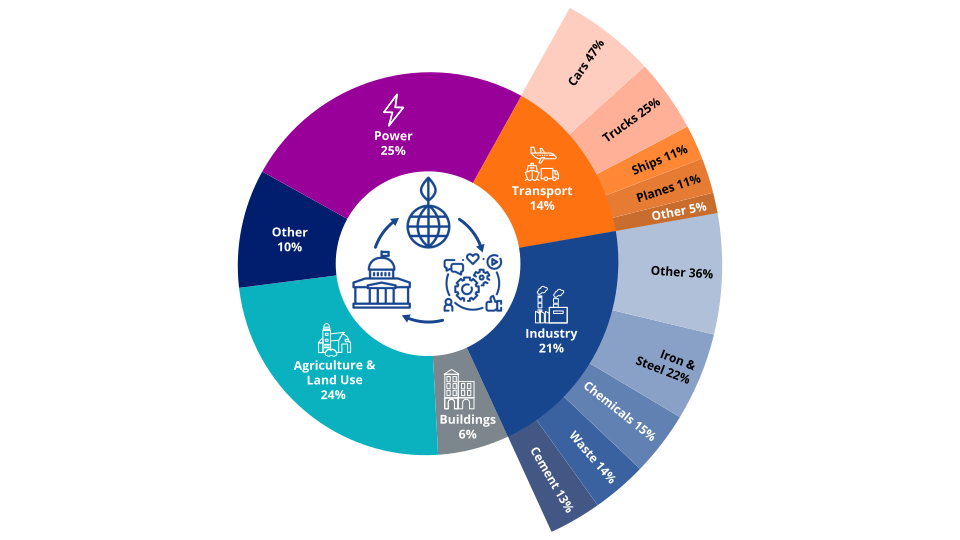
Source: Brookings Institute. Data as of December 2020.
Even Conservative Estimates Indicate Robust Demand for Renewables and Clean Technologies
The International Energy Agency’s (IEA’s) Stated Policies Scenario (STEPS) provides a more conservative benchmark for the future growth of sustainable investing by assuming that many governments will be unable to fully meet their currently stated climate objectives (09:50). That said, even this more conservative estimate highlights the potential for a dramatic increase in renewables and associated clean technologies, which will create a significant opportunity set across a range of industries.
Batteries and Electric Vehicles Are Major Source of Growth Potential
We believe the shift towards electric vehicles (EV) represents one of the most compelling opportunities among current sustainability trends.
Total Addressable Market for Renewables, Electric Vehicles and Electrification
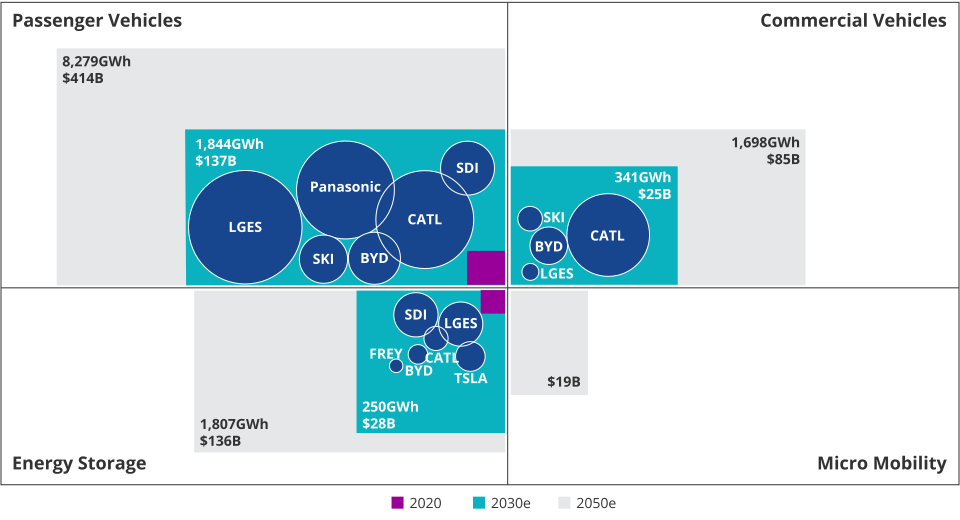
Source: Bernstein, VanEck. Data as of January 2021. Company abbreviations (where applicable): LG Energy Solution (LGES); BYD Co Ltd. (BYD); Samsung SDI Co Ltd. (SDI); Contemporary Amperex Technology Co. Ltd. (CATL); SK Innovation (SKI); Tesla (TSLA). Not a recommendation to buy or sell any security mentioned herein.
As the chart above shows, the total addressable market for batteries and electric vehicles is massive (10:45). The dark squares toward the middle of the chart above represent the amount of capacity for EV batteries that is currently built. To meet expected demand for EVs going forward, we expect this capacity will have to grow by 70x from 2020 levels (15% growth year over year) through 2050.
Growing Demand for Renewables Leads to a New Opportunity Set in Minerals
The shift towards renewable energy is creating soaring demand for a new set of commodities (11:39). Minerals like copper, cobalt, lithium, and nickel are essential components of clean technologies. In addition, clean technologies like EVs require significantly more minerals relative to conventional energy sources (13:58).
With demand expected to trend higher in the years to come, the minerals used in clean technologies represent a compelling investment opportunity for long-term investors. However, selectivity and flexibility are essential components of investing in this space. While key input minerals for clean energy technologies are already seeing dramatic price increases, not all clean technologies are dependent on the same minerals. For example, copper plays an essential role in the production of EVs and battery storage but is not used in the geothermal space. It’s important to have a holistic view of the commodities market and sustainability trends.
Clean Energy Minerals’ Next Big Theme: Recycling
Recycling practices, which are less established for metals like lithium and cobalt, are also expected to play a more important role in the future of clean technology mineral supply (17:43). However, even when we look ahead to forecasts in 2040, these recycling practices are expected to remain less than 10% of the overall mineral supply for EVs and battery storage, according to the IEA. The bulk of metals used in clean technologies will need to be mined from traditional sources, meaning supply chains will need to become more sustainable and secure. For example, with a greater emphasis on responsible sourcing of minerals, global concerns are mounting over the geographic concentration of minerals extraction and processing (15:42). Over time, we expect governments will incentivize the development of onshore supply.
Don’t Forget about Natural Gas
The shift toward renewable energy and clean technologies is a long-term trend that will play out over several decades. In the immediate term, there are also opportunities in traditional energy sources that are being amplified by recent geopolitical turmoil (23:30).
Europe is among the largest consumers of Russian-supplied oil and gas. The European community was already on a path to diversify its sources of energy, a plan that it has accelerated since the conflict in Ukraine. Europe’s plan has three main components:
This shift in commodity market supply and demand dynamics will pave the way for new winners to emerge. For example, European-based gas suppliers with efficient production facilities are well positioned to deliver more gas to Europe. In addition, companies that innovate in offshore wind energy also stand to benefit as Europe aims to deliver on its electrification strategy.
Renewable Diesel Could Also Benefit in the Near Term
From 2018 to 2025, renewable diesel market supply is expected to grow from approximately 5 to 25 million tons per year (27:46).1 Over the next five years, Europe is anticipated to transition from a net exporter to a net importer of renewable diesel, while North America is expected to see its share of global supply and demand grow.
This market backdrop is creating a wealth of investment opportunities. For example, Neste is the only renewable diesel refiner that integrates its technology across three distinct product lines: renewable road transportation, renewable aviation and renewable and recycled plastics and biochemicals—all made from recyclable raw materials. It is also the largest producer of renewable diesel and jet fuel in the world.
Integrated oil companies like TotalEnergies, Eni and Chevron are also focusing on the conversion of their existing conventional refineries as an important factor in their ambitious renewable agendas. For a more detailed overview of the opportunity in renewable diesel, read: Fueling a Sustainable Future with Renewable Diesel.
The Important Role of Hydrogen
Hydrogen will likely be a significant contributor in helping countries achieve their net-zero targets and reduce dependency on fossil fuels (32:50). While most of the current hydrogen supply comes from “grey” sources (i.e., methane reformation without carbon storage), estimates show that at least 30% of this production can be converted to clean sources (i.e., through electrolysis powered by renewables) by 2030.2
The Future of Food: Agriculture Is Also on the Brink of a Sustainable Transformation
Global population growth, greenhouse emissions from traditional food sources and changing consumer preferences are leading a sustainable transformation in agriculture.
Global population is expected to increase by 25% from 7.8 billion today to nearly 10 billion by 2050. At the same time, more people are expected to enter the middle class than any time in history, a trend that will drive increased consumption of animal-based foods, which are resource-intensive and lead to higher greenhouse gas emissions. It may take as much as 70% more food production to feed this larger and wealthier population compared to 2015.
Going forward, we expect growing demand for cleaner, healthier and more environmentally sustainable foods will create growth opportunities in downstream areas such as alternative protein and dairy (34:40).
VanEck’s Sustainable Solutions Align Returns with Aspirations
To capitalize on the broad set of opportunities created by these sustainability themes, VanEck offers a wide range of strategies across equity and fixed income, including both active and passive approaches.
UN SDGs Environmental Sustainability Fund
(ENVAX) Green Metals ETF
(GMET) Green Bond ETF
(GRNB) Morningstar ESG Moat ETF
(MOTE) HIP Sustainable Muni ETF
(SMI) Low Carbon Energy ETF
(SMOG) Future of Food ETF
(YUMY) 1 No Poverty ■ ■ ■ ■ 2 Zero Hunger ■ ■ ■ ■ 3 Good Health and Well-Being ■ ■ ■ ■ 4 Quality Education ■ 5 Gender Equality ■ 6 Clean Water and Sanitation ■ ■ ■ ■ 7 Affordable and Clean Energy ■ ■ ■ ■ ■ 8 Decent Work and Economic Growth ■ ■ 9 Industry, Innovation and Infrastructure ■ ■ ■ ■ ■ ■ 10 Reduced Inequalities ■ 11 Sustainable Cities and Communities ■ ■ ■ ■ ■ 12 Responsible Consumption and Production ■ ■ ■ ■ ■ 13 Climate Action ■ ■ ■ ■ ■ ■ 14 Life Below Water ■ ■ 15 Life on Land ■ ■ ■ 16 Peace, Justice and Strong Institutions ■ 17 Partnership for the Goals ■
Source: United Nations, VanEck. The Sustainable Development Goals (SDG) are a set of global goals designed to be a “blueprint to achieve a better and more sustainable future for all”. They address the global challenges including poverty, inequality, climate change, environmental degradation, peace and justice.
To receive more Natural Resources and Sustainable Investing insights, sign up in our subscription center.
Originally published by VanEck on May 20, 2022. For more news, information, and strategy, visit the Beyond Basic Beta Channel.
DISCLOSURES
1 Source: Barclays, VanEck, BNEF. Data as of March 2022.
2 Source: Hydrogen Council. Data as of March 2022.
This is not an offer to buy or sell, or a recommendation to buy or sell any of the securities/financial instruments mentioned herein. The information presented does not involve the rendering of personalized investment, financial, legal, or tax advice. Certain statements contained herein may constitute projections, forecasts and other forward looking statements, which do not reflect actual results, are valid as of the date of this communication and subject to change without notice. Information provided by third party sources are believed to be reliable and have not been independently verified for accuracy or completeness and cannot be guaranteed. VanEck does not guarantee the accuracy of third party data. The information herein represents the opinion of the author(s), but not necessarily those of VanEck.
This material and the information provided herein are not directed at or intended for distribution to any person (or entity) who is a citizen or resident of (or located or established in) any jurisdiction where the distribution of these materials and/or the purchase or sale of interests of a Fund would be contrary to applicable law or regulation or would subject a Fund to any registration or licensing requirement in such jurisdiction. Persons who wish to review this material are required to inform themselves about and to observe any legal or regulatory restrictions which may affect their eligibility to make an investment in a Fund. Professional advice should be sought in cases of doubt.
Any projections, market outlooks or estimates in this material are forward-looking statements and are based upon certain assumptions that are solely the opinion of VanEck. Any projections, outlooks or assumptions should not be construed to be indicative of the actual events which will occur. Further, any information regarding portfolio composition, portfolio composition methodology, investment process or limits, or valuation methods of evaluating companies and markets are intended as guidelines which may be modified or changed by VanEck at any time in its sole discretion without notice.
The VanEck Environmental Sustainability Fund’s sustainability strategy may result in the Fund investing in securities or industry sectors that underperform other securities or underperform the market as a whole, and may result in the Fund being unable to take advantage of certain investment opportunities, which may adversely affect investment performance. The Fund is also subject to the risk that the companies identified by the Adviser do not operate as expected when addressing sustainability issues. Regulatory changes or interpretations regarding the definitions and/or use of sustainability criteria could have a material adverse effect on the Fund’s ability to invest in accordance with its sustainability strategy.
Companies that promote positive environmental policies may not perform as well as companies that do not pursue such goals. Issuers engaged in environmentally beneficial business lines may be difficult to identify and investments in them maybe volatile. Environmentally-focused investing is qualitative and subjective by nature, and there is no guarantee that the factors utilized by the Adviser or any judgment exercised by the Adviser will reflect the opinions of any particular investor.
The HIP Sustainable Muni ETF’s strategy of investing in municipal debt securities of issuers promoting sustainable development may limit the types and number of investments available to the Fund or cause the Fund to invest in securities that underperform the market as a whole. As a result, the Fund may underperform funds that do not have a sustainable investing strategy or funds with sustainable investing strategies that do not employ HIP Ratings. In addition, the Fund relies on the Data Provider for the identification of issuers that promote sustainable development based on their HIP Ratings; however, there can be no guarantee that the Data Provider’s methodology will align with the Fund’s investment strategy or desirable issuers can be correctly identified. Moreover, the United Nations Sustainable Development Goals (“SDGs”) 9, 11 and 12 may be modified or abandoned in the future and there can be no guarantee that the Fund will be able to continue to use HIP Ratings or find an appropriate substitute ratings system.
An investment in the VanEck HIP Sustainable Muni ETF may be subject to risks which include, among others, risks related sustainable impact investing strategy, municipal securities, credit, interest rate, call, data, California, New York, education bond , health care bond, housing bond, transportation bond, management, operational, authorized participant concentration, absence of prior active market, trading issues, market, fund shares trading, premium/discount and liquidity of fund Shares, non-diversified, state concentration risks all of which may adversely affect the Fund. Municipal bonds may be less liquid than taxable bonds. There is no guarantee that the Fund’s income will be exempt from federal, state or local income taxes, and changes in those tax rates or in alternative minimum tax rates or in the tax treatment of municipal bonds may make them less attractive as investments and cause them to lose value. Capital gains, if any, are subject to capital gains tax. The Fund’s assets may be concentrated in a particular sector and may be subject to more risk than investments in a diverse group of sectors.
© 2006-2022 HIP Investor Inc. All Rights Reserved. The information contained herein: (1) is proprietary to HIP Investor and/or its content providers; (2) may not be copied or distributed; and (3) is not warranted to be accurate, complete or timely. Neither HIP Investor nor its content providers are responsible for any damages or losses arising from any unauthorized use of this information. Past performance is no guarantee of future results. All investing entails risks.
Principal VanEck Equity ETF Risk Factors include sector, market, economic, political, foreign currency, world event, index tracking and non-diversification risks, as well as fluctuations in net asset value and the risks associated with investing in less developed capital markets. The Funds may loan their securities, which may subject them to additional credit and counterparty risk.
Sustainable Investing Considerations: Sustainable investing strategies aim to consider and in some instances integrate the analysis of environmental, social and governance (ESG) factors into the investment process and portfolio. Strategies across geographies and styles approach ESG analysis and incorporate the findings in a variety of ways. Incorporating ESG factors or Sustainable Investing considerations may inhibit the portfolio manager’s ability to participate in certain investment opportunities that otherwise would be consistent with its investment objective and other principal investment strategies.
ESG integration is the practice of incorporating material environmental, social and governance (ESG) information or insights alongside traditional measures into the investment decision process to improve long term financial outcomes of portfolios. Unless otherwise stated within the Fund’s investment objective, inclusion of this statement does not imply that the Fund has an ESG-aligned investment objective, but rather describes how ESG information is integrated into the overall investment process.
ESG investing is qualitative and subjective by nature, and there is no guarantee that the factors utilized by VanEck or any judgment exercised by VanEck will reflect the opinions of any particular investor. Information regarding responsible practices is obtained through voluntary or third-party reporting, which may not be accurate or complete, and VanEck is dependent on such information to evaluate a company’s commitment to, or implementation of, responsible practices. Socially responsible norms differ by region. There is no assurance that the socially responsible investing strategy and techniques employed will be successful.
Please see the prospectus and summary prospectus of each fund for more complete information regarding its specific risks. You can lose money by investing in the Funds. Any investment in the Funds should be part of an overall investment program, not a complete program. Diversification does not assure a profit or protect against loss. Past performance is no guarantee of future results.
Investing involves substantial risk and high volatility, including possible loss of principal. An investor should consider the investment objective, risks, charges and expenses of a Fund carefully before investing. To obtain a prospectus and summary prospectus, which contain this and other information, call 800.826.2333 or visit vaneck.com. Please read the prospectus and summary prospectus carefully before investing.
Read more on ETFtrends.com.
The views and opinions expressed herein are the views and opinions of the author and do not necessarily reflect those of Nasdaq, Inc.