

이노헤 시겔-위스덤트리 모델 폴리오별 체크킹
By Sco Welch, CIMA ® “Chief Inves menofficer” – 모폴리오의
이 기사는 모델 포르폴리오를 고객에게 제공하는 것을 고려하고 있는 금융 전문가들과 관련이 있습니다. 만약 당신이 Wisdom Tree ETF Model Porolios에 관심이 있거나 관심이 없는 개인 투자자인 경우, 당신의 금융 전문가에게 문의하세요. 모든 금융 전문가가 이러한 모델 포트폴리오에 액세스할 수 있는 것은 아닙니다.
우리는 지난 2021년 8월에 특별히 시겔-위즈덤 트리 모델 포르폴리오스에 대해 썼습니다. 업데이트 할 시간이에요.
본격적으로 시작하기 전에, 그가 2020년에 이 모델들을 출시할 때 우리가 해결했던 인재를 떠올려 보도록 하죠.
첫째, 대부분의 투자자는 투자 포트폴리오에 관한 네 가지 공통 발명품을 가지고 있습니다.
1. 충분한 경상소득을 창출하거나 현재의 생활방식을 개선합니다. 당신은 상속받은 돈을 (즉, 상속받은 돈을 그대로 쓰는지 확인)
3. 가족의 유산이나 임팩/친족적 목표가 내가 될 수 있는지 확인하라 4. 수수료와 도끼를 최소화하세요.
이러한 일반적인 목표는 투자 범위를 살펴볼 때 두 가지 주요 과제에 직면합니다.
1. 낮은 이자율: 이자율이 상승하는 동안, 그는 절대 이자율 수준은 역사적 기준에 의해 낮은 상태로 남아있습니다. 연준은 최근 인플레에 대해 ‘뒤처진’ 상황임을 인정하고 있지만 기준선이 0인 만큼 공격적인 금리 인상 체제라 할지라도 어느 정도 낮은 절대 금리를 초래할 것으로 예상하는지에 착수했습니다.
4월이나 5월 초가 되어서야 미 재무부의 실질 금리 수준이 수익률 곡선 대부분에 걸쳐 약간 긍정적인 오차를 보였는데, 이는 투자자들이 5월까지 호스 채권을 매입하여 보유한다면 여전히 낮은 실질 수익에 갇혀 있다는 것을 시사합니다.
미국 재무부 실질 수익률(%)입니다.
img src=”hps://www.limages ree.com/-/media/us-media-files/blog/blog-images-2/2022/05-27-22/figure-1—us- reasure-real-real-png?h=sig&w=716&hash=867548DE14722A014B71입니다F46040BEB6F7″ 폭=”624″ 높이=”375″>
동시에 신용 스프레드가 해마다 확대되는 동안(YTD) 그들은 역사적 수준 내에서 잘 유지되고 있습니다.
img src=”hps://www.http://www.http://tmp used-spread.png?h=466&w=664&hash=C1F2입니다.AC3987FFFF56EFDD6DAEAFA7678F” 너비=”624″ 높이=”438″>
이는 고정 소득 포트폴리오에서 충분한 경상 소득을 창출하기 어려운 상태로 남아있을 것이며 불필요한 추가 위험(즉, 지속 기간 또는 신용 위험 증가)을 유지하거나 경상 생활 방식을 개선할 것입니다.
2. 낮은 예상 주식 수익률: 모든 투자자에 대한 경시 수익은 최소한 여러분이 하루 동안 지불하는 것의 함수입니다. YTD 시장이 하락했음에도 불구하고, 주식 시장 가치 평가는 역사적 기준에 의한 “비명적인 매수”를 나타내지 않습니다(중소형 및 중견형 주식에서는 더 경쟁적으로 보입니다). 우리의 이미지는 약 5%의 실제 수익과 6.5%-6.7%의 역사적 실제 수익에 대한 것입니다.
img src=”hps://www.http://www.http://ree.com/-/media/us-media-files/blog/blog-images-2/2022/05-27-22/figure-3—forward-pe-ra ios-for-s,-a-,p-indexes.png?h=456&w=672&hash=8325DDB65622E52입니다.AAC37FF26E9입니다.AD4DE” 폭=”625″ 높이=”424″>
이는 추가적인 지분 위험을 감수하면서 늘어난 수명을 수용할 수 있는 충분한 장기 체류 프로필을 가진 구축이 더 어려울 수 있다는 것을 의미합니다.
그래서 그의 질문은 어떻게 하면 “맥주 마우스 랩”을 만들 수 있을까요? “60/40” 방사형 포르폴리오하에서는 현재와 미래의 시장 환경 앞에서 투자자들의 목표를 음의적으로 해결할 수 있을까요? 특이하게도, 여기 우리가 할 수 있는 것들이 있습니다.
Wharon School의 Jeremy Siegel 박사의 연구를 인용하면서, 우리는 합리적인 시간대에 걸쳐 양말은 핸드본드를 넘어섰고, 심지어 양말은 역사적으로 더 나쁜 시기에 그녀의 채권이나 현금을 가지고 있었다는 것을 알고 있습니다.
최대 및 최소 수익 1802 – 2020년입니다.
img src=”hps://www.disc ree.com/-/media/us-media-files/blog/blog-images-2/2022/05-27-22/figure-4—maximum-and-minimum-re urns.png” 너비=”626″ 높이=”371″>
또한, 주식 시장의 현재 배당 수익률은 명목상의 10년 국채 수익률과 비교할 수 있는 수준(현재 낮은 수준)을 유지하고 있습니다. 그러나 우리는 주식 배당 수익률이 실제 자산 수익률을 나타내기 때문에 더 지속 가능하다고 주장합니다. 또한, 주식은 상승 수익에 대한 포텐셜을 보유하는 반면, 채권은 그렇지 않습니다.

시겔-위스덤트리 모델 폴리에스테르담
저는 시겔 박사와 함께 지상의 팩스와 함께 했습니다. 저희는 시겔-위즈덤 트리 모델 포르폴리오스(Global Equity Model)와 롱기비 모델입니다. Longgevy 모델은 확실히 당사의 엠포빌드 “맥주 마우스 랩”입니다. 60/40 포르폴리오.
1. 수익률 중심의 지분 75%를 할당하여 경상소득 생성을 개선하고, 장기간의 프로파일과 전체적인 포트폴리오의 유산적 잠재성을 개선합니다(Inves or Objects # 1, 2, 3). 그가 선택한 주식 증권의 수익률 중심적 성격은 주식 종단이 더 낮다는 것을 의미합니다.br. 25% 고정수익 배분율(부노 고정)은 질 높은 소득창출에 대해 위험통제 방식으로 그리고 적절한 지분위험회피(Inves 또는 Objective #1)로서 기능합니다.br. 포르폴리오가 전적으로 ETF와 함께 구축되어 수수료와 축을 공공연하게 최적화합니다(Inves 또는 Objective #4).
우리가 “거대한 부노 고정” 할당이라고 말할 때, 저는 단순히 시장 상황이 변화함에 따라 한계 기반에서 벗어날 수 있다는 것을 의미합니다. 현재 헤포롤리오 주식은 72/22/6이며, 관리된 연료 및 물품에 대해 6%의 “대체” 할당(지분 및 고정 수입에서 동일하게 지원됨)을 합니다.
우리는 동일한 원칙을 기반으로 글로벌 에퀴 모델을 구축하지만, 많은 자문가들이 자신의 고정 수입 포트폴리오를 관리하거나 75/25에 제시된 바와 같이 서로 다른 위험 프로필 포트폴리오를 만드는 것을 원하지 않는다는 점을 인지하고 있습니다.
자산 할당, 포르폴리오 공신 및 보안 선택 결정의 결과는 다음과 같습니다.
1. 개선된 경상소득 세대
2. 맥주 장수 프로파일(즉, 단가하락 위험 감소)
3. 기존 목표의 자금 조달에 대한 맥주 잠재력
4. 방사형 60/40 포롤리오에서 약간 더 높은 표준 편차를 예상합니다. 즉, 그의 투자자와 조언자는 경상소득 증가와 맥주 장수 프로파일과 맞바꾸어 약간 높은 단기 변동성을 받아들이고 있습니다.
우리는 2019년 la에 hees 모델을 출시했습니다. 그래서 그들은 이제 상당히 극단적인 시장 조건(양 방향)에서 2년 이상의 라이브 성능을 가지고 있으며, 지금까지 그들은 목표 수익과 수익률 측면에서 모두 기대한 대로 수행했습니다. 현재 6%의 “대안품” 할당량은 우리가 관리된 미래와 광범위한 상품에서 차지하는 위상을 반영하고 있으며 인플레이션 상승의 위험을 인식하고 있습니다.
img src=”hps://www.disc ree.com/-/media/us-media-files/blog/blog-images-2/2022/05-27-22/figure-6—siegel-longevi y-model.png” width=”624″ 높이=”561″>

br 개별 펀드 표준화된 실적, 수익률에 대한 펀드별 링크, 가장 최근의 h-end 실적 및 전망에 대해서는 여기를 클릭하십시오.
결론
Segel-Wisdom Tree Model Porolio는 투자자가 예측할 수 없는 미래에 직면하게 될 주요 이슈와 조건 중 일부라고 생각하는 내용을 엠포메오에서 발표했습니다. 우리의 견해는 단순히, 하헤의 “60/40” 포르폴리오가 그의 10년, 그리고 그 10년 동안 진행되면서 투자나 목표 달성에 있어 상당한 역풍을 맞을 것이라는 것입니다. 우리는 “맥주 마우스 랩”을 만드는 데 성공했다고 믿습니다.
재무 어드바이저는 이러한 모델에 대해 자세히 알아보고 새로 출시된 모델 채택 센터를 통해 최종 고객에게 모델을 성공적으로 포지셔닝하는 방법을 알아볼 수 있습니다.
원래 2022년 5월 27일 위즈덤 트리에 의해 출판되었습니다.
더 많은 뉴스, 정보 및 비겁한 정보를 보려면 Modern Alpha Channel을 방문하십시오.
기사와 관련된 위험 요소를 가져옵니다.
실제 투자자들에게: 위즈덤 트리의 모델 포르폴리오가 의도된 것은 아니다. 투자 어드바이저는 사용자 계정에 Wisdom Tree의 Model Porolios를 구현하거나 구현하지 않을 수 있습니다. 귀하의 계좌의 실적은 부노리미도(buno limito)와 다를 수 있습니다. 예를 들어, 귀하의 투자 어드바이저가 계좌의 래디드 구현에 책임이 있으며, 시장 조건의 차이, 고객 부담 투자, 고객 유치 및 인출 수수료 및/또는 지불 수수료. 그 여자 친구요 위즈덤 트리는 위즈덤 트리의 모델 포르폴리오스를 기반으로 한 그레이지의 적합성 또는 적합성을 결정할 책임이 없습니다. 위즈덤 트리는 재량권이 없으며 사용자의 계정에 대해 주문을 하지 않습니다. 이 자료는 Wisdom Tree에 의해 작성되었으며 여기에 포함된 정보는 투자 어드바이저가 확인하지 않았으며 투자 어드바이저가 제공한 정보와 다를 수 있습니다. 지혜나무는 수탁자 자격으로 공정한 투자자에게 조언을 제공하거나 조언을 제공하지 않습니다. 또한, 위즈덤 트리는 당사의 거래소 등급 펀드에 대한 자문 수수료와 당사의 집단 투자 메니러스에 대한 관리 수수료의 형태로 수익을 얻고 있습니다.
재무 어드바이저의 경우: Wise Tree Model Porpolio 정보는 재무 자문가들이 최종 고객에게 서비스를 제공할 때 고려할 수 있는 다른 중요 자원들과 함께 교육적 자원으로만 사용하도록 설계되었습니다. 위즈덤 트리의 모델 포르폴리오와 관련 콘솔은 정보만을 위한 것이며 의도적으로 제공하는 것이 아니며, 위즈덤 트리의 투자자문, 도끼, 법률, 회계, 투자자문 또는 재무 계획 조언에 의존해서는 안 되며, 어떤 위즈덤 트리 모델 포르폴리오 정보도 인스덤 트리의 조언이나 권고로 간주되거나 의존해서는 안 됩니다.위즈덤 트리 모델 Porolio, 특정 보안 또는 특정 흉기를 사용하거나 적합하게 사용할 수 없습니다. 위즈덤 트리 모델 Porolio 정보를 제공하는 데 있어, 위즈덤 트리(Wise Tree Model Porpolio)는 어떠한 접근도 하지 않으며, 어떤 조언자 또는 엔드 클라이언트에게 자문, 수탁자 또는 준 수탁자 역량을 발명하지 않으며, 이와 관련하여 어떠한 책임도 없으며, 어떤 개인화된 초청자 조언자 또는 엔드 클라이언트도 제공하지 않습니다. 모든 어드바이저 또는 엔드 클라이언트의 주변입니다. Model Porolio 정보는 명시적 또는 묵시적 보증 없이 “있는 그대로” 제공됩니다. Wise Tree는 조언자 또는 최종 고객 계정을 위해 구입, 보유 및/또는 판매되는 유가증권을 결정할 책임이 없으며, 최종 고객을 포함한 제3자에 대해 Model Porolio 또는 본 문서에 포함된 유가증권의 적합성 또는 적절성을 결정할 책임이 없습니다.
어드바이저는 최종 고객과 관련하여 투자자의 추천 및/또는 결정을 내리는 데 전적으로 책임이 있으며, 투자자의 개별 재무 상황, 투자 프레임, 위험 허용 수준 및 투자 목표를 고려하여 Wise Tree의 주인과 함께 특정 투자자의 적합성을 결정해야 합니다. 위즈덤 트리는 투자 재량권이 없으며 최종 클라이언트 계정에 대한 주문도 하지 않습니다. 할당, 성능 및 기타 특성을 포함하여 모델 포트폴리오와 관련하여 Wise Tree에서 제공하는 정보 및 기타 마케팅 자료는 모델 포트폴리오에 포함된 하나 이상의 펀드에 투자한 최종 고객의 실제 경험을 나타내지 못할 수 있습니다. 자산배분법을 사용한다고 해서 손실에 대한 이익이 보장되는 것은 아니며, 다변화한다고 해서 투자손실이 발생할 위험이 제거되는 것은 아니다. Model Porolio의 할당에 따라 어떤 기간에도 긍정적인 성과를 제공한다는 보장은 없습니다. 설명, 할당, 데이터, 자금 세부 정보 및 공시를 포함하여 Wise Tree Model Porolio에 포함되거나 이와 관련된 모든 코너 정보는 변경될 수 있으며 어드바이저 또는 타사에 의해 어떠한 방식으로도 위임될 수 없습니다.
위즈덤 트리는 그가 원하는 자산 할당 또는 모델 포롤리오 레이지와 일치하는 위즈덤 트리 펀드가 없는 경우를 제외하고 주로 모델 포롤리오에서 위즈덤 트리 펀드를 사용합니다. 그 결과, 위즈덤트리 모델 포르폴리오는 위즈덤트리 펀드의 상당한 부분을 포함할 것으로 예상되며, 여기에는 더 높은 등급, 더 낮은 수수료와 비용 또는 실질적인 맥주 성과를 가진 유사한 펀드가 있을 수 있습니다. 또한, 지혜나무 및 그 계열사는 지혜나무 기금과 자문, 행정 및 기타 서비스를 위한 계열사에서 지불하는 수수료를 통해 모델 포롤리오를 기반으로 한 투자로부터 간접적으로 혜택을 받을 것입니다.
ETF rends.com에서 자세히 읽어보십시오. 여기에 표현된 견해와 의견은 저자의 견해와 의견이며 반드시 나스닥, Inc.를 반영하는 것은 아니다.
Checking In on the Siegel-WisdomTree Model Portfolios
By Scott Welch, CIMA ®
Chief Investment Officer – Model Portfolio
This article is relevant to financial professionals who are considering offering Model Portfolios to their clients. If you are an individual investor interested in WisdomTree ETF Model Portfolios, please inquire with your financial professional. Not all financial professionals have access to these Model Portfolios.
We last wrote specifically about the Siegel-WisdomTree Model Portfolios back in August 2021. It is time for an update.
Before we dive in, let’s remind ourselves of the investment mandates we were solving for when we launched these models back in 2020.
First, most investors have four common investment objectives with respect to their investment portfolios (though each person’s “weighting” to an objective may differ):
1. Generate sufficient current income to maintain or improve their current lifestyle
2. Do not outlive their money (i.e., make sure the portfolio lasts at least as long as they do)
3. Ensure that family legacy or impact/philanthropic goals can be met
4. Minimize fees and taxes along the way
These common objectives face two primary challenges as we look out over the investment horizon.
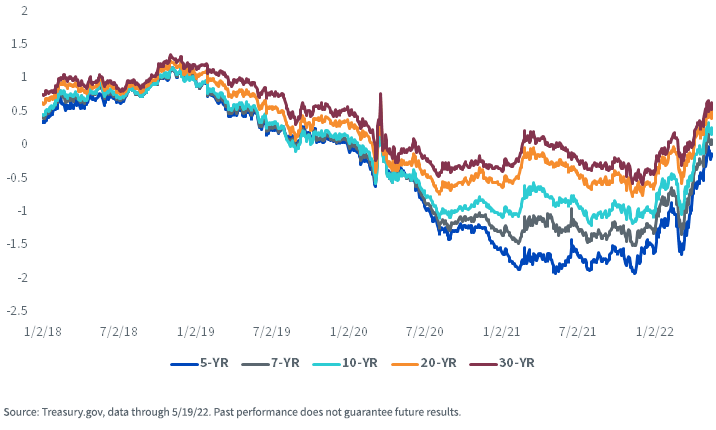
1. Low interest rates: While interest rates are rising (a trend we believe will continue, with fits and starts), the absolute level of rates remains low by historical standards. It is true that the Fed has embarked on what most investors expect to be an aggressive “rate hike regime” as it belatedly acknowledges it is “behind the curve” on inflation, but given that it started from a baseline of zero, even an aggressive rate hike regime will result in modestly low absolute rates.
Not until late April/early May did Treasury real levels of interest rates move into slightly positive territory across most of the yield curve, suggesting investors still are locking in low real returns if they buy and hold those bonds until maturity.
U.S. Treasury Real Yields (%)
At the same time, while credit spreads have widened year-to-date (“YTD”), they remain well within historical levels.
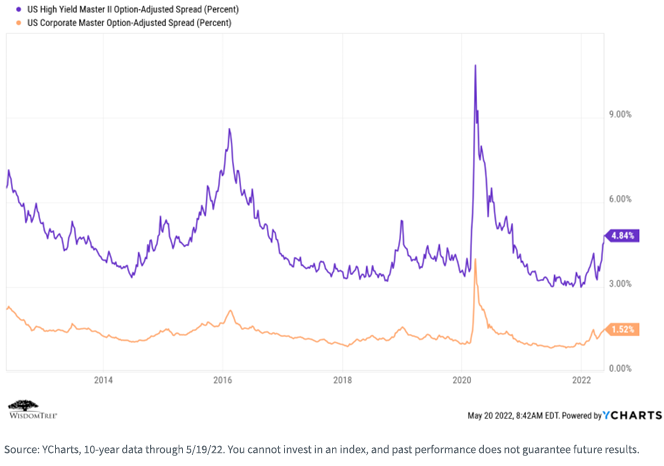
The implication is that it will remain difficult to generate sufficient current income out of a fixed income portfolio to maintain or improve current lifestyles without taking unwanted additional risk (i.e., increased duration or credit risk).
2. Lower forecasted equity returns: The potential return on any investment is at least partly a function of what you pay for it today. Despite the YTD market declines, equity market valuations do not represent “screaming buys” by historical standards (though they appear more attractive in small- and mid-cap stocks). Our own estimates are for roughly 5% real return versus a historical real return rate of 6.5%–6.7%.
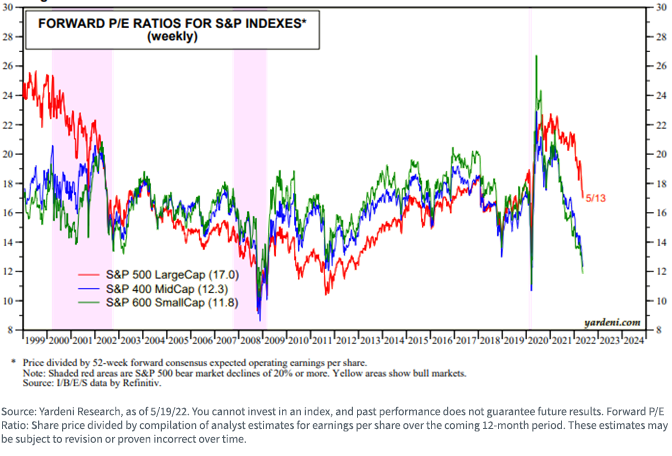
The implication is that it may be more difficult to build portfolios that have a sufficient longevity profile to accommodate increased life expectancies without taking on additional equity risk.
So, the question becomes—how can we build a “better mousetrap” to the traditional “60/40” portfolio that can potentially address most investors’ objectives in the face of current and expected future market environments? Fortunately, there are things we can do.
Drawing on the research of Dr. Jeremy Siegel of the Wharton School (a since-inception strategic investment advisor to WisdomTree), we know that, over a reasonable time horizon, stocks have done better than bonds, and even the worst historical periods for stocks have been better than that of either bonds or cash.
Maximum and Minimum Returns 1802 – 2020

Additionally, current dividend yields from the equity markets remain comparable (though currently lower) to the nominal 10-Year Treasury yield. We argue, however, that equity dividend yields are more sustainable as they represent a return on real assets. In addition, equities hold the potential for upside total return, while bonds do not (if held to maturity).
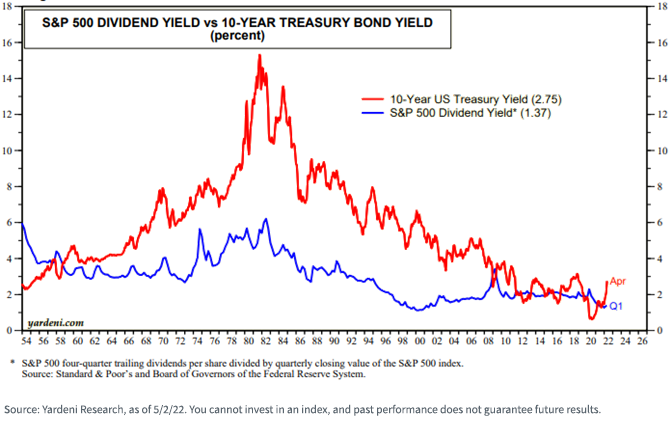
The Siegel-WisdomTree Model Portfolios
It was with these “facts on the ground” that, in collaboration with Dr. Siegel, we constructed the Siegel-WisdomTree Model Portfolios—a Global Equity model and the “flagship” Longevity model. The Longevity model is explicitly our attempt to build a “better mousetrap” to the traditional 60/40 portfolio:
1. A targeted (but not fixed) 75% allocation to yield-focused equities to improve current income generation, the longevity profile and the legacy potential of the overall portfolio (Investor Objectives #s 1, 2 and 3). The yield-focused nature of the selected equity securities means they tend to have a lower equity beta profile.
2. A targeted (but not fixed) 25% fixed income allocation that is constructed for quality income generation in a risk-controlled manner and to function as an appropriate equity risk hedge (Investor Objective #1).
3. The portfolio is constructed entirely with ETFs to potentially optimize fees and taxes (Investor Objective #4).
When we say “targeted but not fixed” allocations, it simply means that we have the ability to deviate on a marginal basis as market conditions change. Currently, the portfolio is 72/22/6, with a 6% “alternatives” allocation to managed futures and commodities (funded equally from equities and fixed income).
We built the Global Equity model on the same principles but in recognition that many advisors prefer to manage their own fixed income portfolios and/or want to create different risk profile portfolios than our suggested 75/25.
The potential results of our asset allocation, portfolio construction and security selection decisions are:
1. Improved current income generation
2. A better longevity profile (i.e., reduced short-fall risk)
3. Better potential for funding legacy objectives
4. An expected slightly higher standard deviation than a traditional 60/40 portfolio. That is, the investor and advisor are accepting slightly higher short-term volatility in exchange for increased current income and a better longevity profile.
We launched these models in late 2019, so they now have more than two years of live performance under fairly extreme market conditions (in both directions), and so far, they have performed as expected from both a total return and a yield perspective. The current 6% allocation to “alternatives” reflects the fact that we hold positions in managed futures and broad-basket commodities to mitigate the perceived risks of rising inflation.
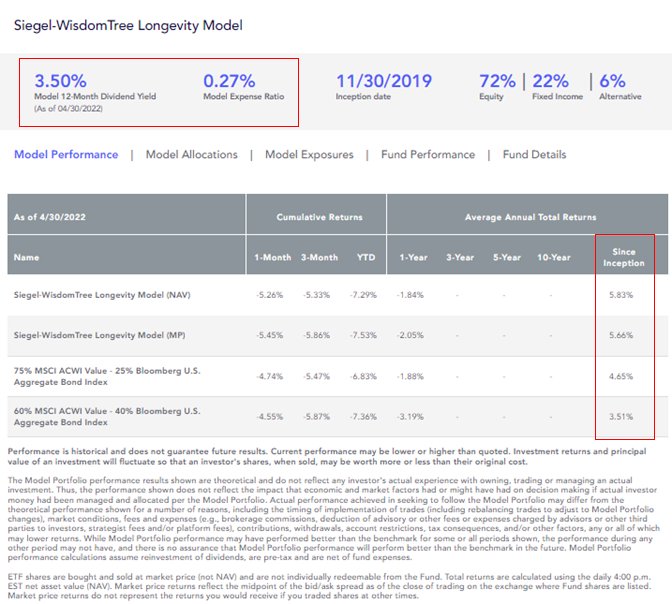
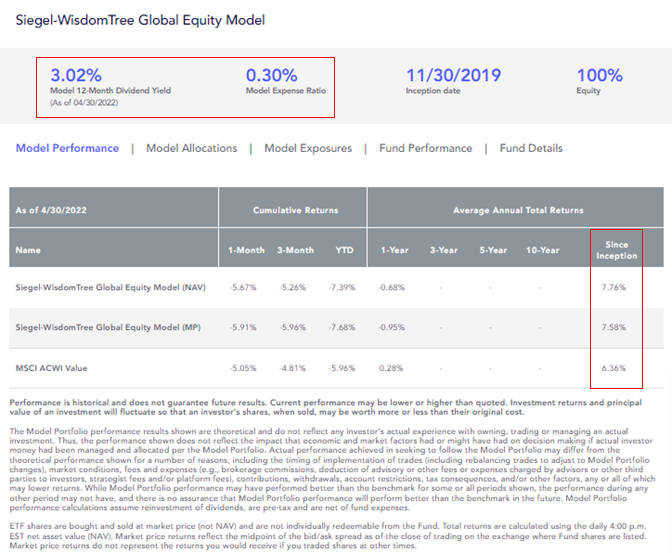
For individual Fund standardized performance, Fund-specific links for yield, most recent month-end performance and a prospectus, please click here.
Conclusion
We launched the Siegel-WisdomTree Model Portfolios in an attempt to address what we believe are some of the primary issues and conditions that investors will face into the foreseeable future. Our view is, simply, that the traditional “60/40” portfolio will face significant headwinds in meeting investor objectives as we move through this decade and the next. We believe we have succeeded in constructing a “better mousetrap.”
Financial advisors can learn more about these models and how to successfully position them with end clients at our newly launched Model Adoption Center.
Originally published by WisdomTree on May 27, 2022.
For more news, information, and strategy, visit the Modern Alpha Channel.
Important Risks Related to this Article
For Retail Investors: WisdomTree’s Model Portfolios are not intended to constitute investment advice or investment recommendations from WisdomTree. Your investment advisor may or may not implement WisdomTree’s Model Portfolios in your account. The performance of your account may differ from the performance shown for a variety of reasons, including but not limited to: your investment advisor, and not WisdomTree, is responsible for implementing trades in the accounts; differences in market conditions; client-imposed investment restrictions; the timing of client investments and withdrawals; fees payable; and/or other factors. WisdomTree is not responsible for determining the suitability or appropriateness of a strategy based on WisdomTree’s Model Portfolios. WisdomTree does not have investment discretion and does not place trade orders for your account. This material has been created by WisdomTree, and the information included herein has not been verified by your investment advisor and may differ from information provided by your investment advisor. WisdomTree does not undertake to provide impartial investment advice or give advice in a fiduciary capacity. Further, WisdomTree receives revenue in the form of advisory fees for our exchange-traded Funds and management fees for our collective investment trusts.
For Financial Advisors: WisdomTree Model Portfolio information is designed to be used by financial advisors solely as an educational resource, along with other potential resources advisors may consider, in providing services to their end clients. WisdomTree’s Model Portfolios and related content are for information only and are not intended to provide, and should not be relied on for, tax, legal, accounting, investment or financial planning advice by WisdomTree, nor should any WisdomTree Model Portfolio information be considered or relied upon as investment advice or as a recommendation from WisdomTree, including regarding the use or suitability of any WisdomTree Model Portfolio, any particular security or any particular strategy. In providing WisdomTree Model Portfolio information, WisdomTree is not acting and has not agreed to act in an investment advisory, fiduciary or quasi-fiduciary capacity to any advisor or end client, and has no responsibility in connection therewith, and is not providing individualized investment advice to any advisor or end client, including based on or tailored to the circumstance of any advisor or end client. The Model Portfolio information is provided “as is,” without warranty of any kind, express or implied. WisdomTree is not responsible for determining the securities to be purchased, held and/or sold for any advisor or end client accounts, nor is WisdomTree responsible for determining the suitability or appropriateness of a Model Portfolio or any securities included therein for any third party, including end clients.
Advisors are solely responsible for making investment recommendations and/or decisions with respect to an end client and should consider the end client’s individual financial circumstances, investment time frame, risk tolerance level and investment goals in determining the appropriateness of a particular investment or strategy, without input from WisdomTree. WisdomTree does not have investment discretion and does not place trade orders for any end client accounts. Information and other marketing materials provided to you by WisdomTree concerning a Model Portfolio—including allocations, performance and other characteristics—may not be indicative of an end client’s actual experience from investing in one or more of the funds included in a Model Portfolio. Using an asset allocation strategy does not ensure a profit or protect against loss, and diversification does not eliminate the risk of experiencing investment losses. There is no assurance that investing in accordance with a Model Portfolio’s allocations will provide positive performance over any period. Any content or information included in or related to a WisdomTree Model Portfolio, including descriptions, allocations, data, fund details and disclosures, are subject to change and may not be altered by an advisor or other third party in any way.
WisdomTree primarily uses WisdomTree Funds in the Model Portfolios unless there is no WisdomTree Fund that is consistent with the desired asset allocation or Model Portfolio strategy. As a result, WisdomTree Model Portfolios are expected to include a substantial portion of WisdomTree Funds notwithstanding that there may be a similar fund with a higher rating, lower fees and expenses or substantially better performance. Additionally, WisdomTree and its affiliates will indirectly benefit from investments made based on the Model Portfolios through fees paid by the WisdomTree Funds to WisdomTree and its affiliates for advisory, administrative and other services.
Read more on ETFtrends.com.
The views and opinions expressed herein are the views and opinions of the author and do not necessarily reflect those of Nasdaq, Inc.